Prabhdeep Gill
Reveal Menu
Market Commentary: Monthly Bulletin July 2026




Key Points
(All figures are based on bid‑bid prices with income reinvested unless otherwise stated)
A Standout Month for the UK
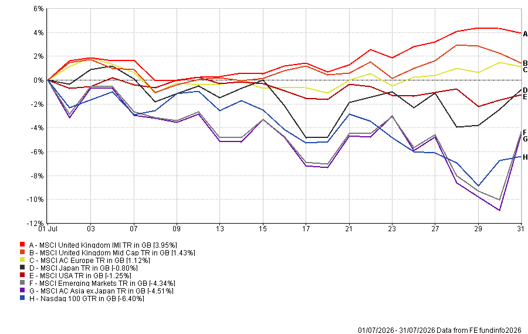
July brought a marked change of leadership. After spending much of the year in the shadow of racier overseas markets, the UK was the best performing major market, with the broad UK index (MSCI United Kingdom IMI) rising 3.95%. European shares also made modest headway, gaining 1.12%. A large part of the reason lay in the oil price. The UK market carries a high weighting in energy, mining and other ‘old economy’ businesses, which tend to prosper when commodity prices rise and when investors turn cautious on more expensive, growth focused shares.
This Year’s Winners Take a Breather
The flip side was a weak month for the areas that had led all year. Asia (excluding Japan) fell 4.51% and Emerging Markets 4.34%, handing back some of their strong first half gains, while US shares slipped 1.25% and the technology heavy Nasdaq 100 dropped 6.40% in sterling terms, its weakest showing for some time.
Two forces were at work. First, midway through the month investors grew nervous that the enormous enthusiasm for artificial intelligence had run ahead of itself, triggering a sharp sell-off in technology shares. A strong run of company results, particularly from giants such as Amazon and Alphabet (the owner of Google), sparked a partial recovery late on, but not enough to pull the sector back into positive territory for the month. Second, a weaker US dollar reduced the value of American returns once converted back into pounds, adding to the drag for UK investors. This rotation is a healthy reminder that market leadership can change quickly, and that spreading investments across regions helps to smooth the journey.
Oil, Iran and Watchful Central Banks
Underpinning all of this was the now familiar backdrop of geopolitics and inflation. The conflict involving Iran flared up again in early July and, because the region is so important to global energy supplies, the oil price jumped by more than 20% at one stage before easing back as tensions calmed. Higher energy costs feed through into inflation, and at the end of July the US Federal Reserve kept interest rates unchanged for the fifth meeting in a row. Notably, three of its officials wanted to raise rates, concerned that higher oil and strong AI-related demand could keep inflation above target, the most divided decision in years. With rate cuts now looking less likely than they did in January, higher for longer interest rates continued to favour cheaper, value-style markets such as the UK over the more expensive growth areas.
Looking Ahead
July was a month of rotation rather than direction, strength at home in the UK, weakness among the year’s former favourites, and the familiar tug-of-war between geopolitical risk and resilient company earnings. Despite the monthly setback, Asia and Emerging Markets remain ahead for the year as a whole, and the UK’s revival is a welcome reminder of the benefits of a well diversified portfolio. As always, we continue to monitor events closely and keep portfolios positioned to protect against risks while participating in opportunities as they arise.
BOOLERS INVESTMENT COMMITTEE